



How to Group Keywords by Search Intent in 4 Simple Steps
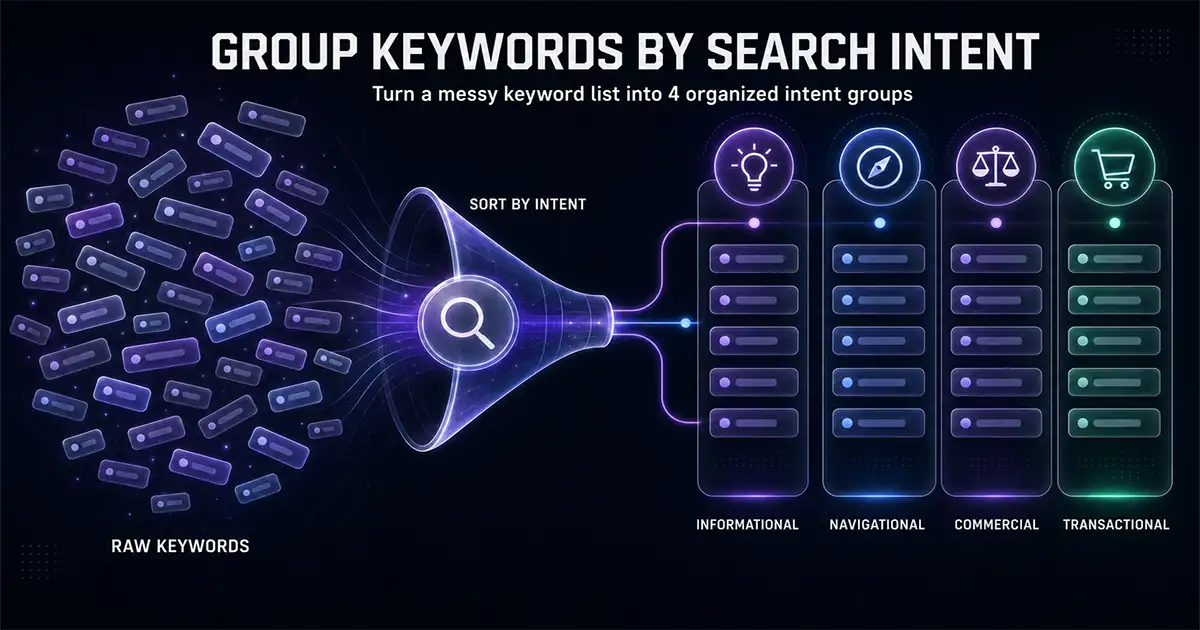
For years, many of us treated keyword research like a numbers game. We built massive spreadsheets, chased the highest search volumes, and forced those keywords onto our pages regardless of what the user actually wanted. Today, that approach is not just ineffective; it actively harms your organic visibility. Recent industry studies suggest that pages failing to match search intent suffer significantly higher bounce rates, and Google’s own quality rater guidelines explicitly prioritize content that satisfies the user’s underlying goal.
If you are a local service provider, a healthcare clinic owner, or managing a small law firm, your audience is looking for very specific answers and solutions. When you understand user search behavior, you realize that every query carries a specific expectation. If your page does not meet that expectation, the user will leave, and search engines will take notice. As a digital marketing consultant, I always advise my clients that a successful SEO content strategy begins with understanding the human behind the search. Let us walk through a practical, human-first approach to keyword grouping and keyword mapping.
Step 1: Gather and Understand the Four Types of Search Intent
Before we can group anything, we must understand what we are looking at. Search intent—sometimes called user intent—is simply the primary goal a person has when they type a query into a search engine. When we analyze SERP intent (the types of pages Google chooses to rank for a given query), we generally see four main search intent categories.
The first is informational intent. This occurs when a user wants to learn something, such as “how to file for divorce” or “symptoms of a torn meniscus.” They are looking for education, not a sales pitch. The second category is navigational intent, where the user is trying to find a specific website or physical location, like “Smith Law Firm login” or “Main Street Dental.”
The third category is commercial intent. Here, the user is preparing to make a decision but is still weighing their options. They use queries like “best personal injury lawyer near me” or “Invisalign vs braces.” Finally, we have transactional intent, where the user is ready to take immediate action. Queries like “hire a plumber today” or “book an eye exam online” fall into this bucket. For local businesses, these often overlap with local intent, where the user specifically needs a service in their immediate geographic area.
Step 2: Sort Your Keywords by the Intent Behind Each One
Once you have your raw list of keywords, the next step is to sort them. Do not simply rely on search volume metrics; you must look at the actual words used in the query. This is the foundation of an intent-based SEO strategy.
Start by identifying the modifiers in your keyword list. Words like “how,” “what,” “guide,” and “tips” almost always signal informational intent. Conversely, words like “buy,” “hire,” “cost,” “book,” and “near me” indicate transactional or commercial intent. You will also encounter mixed intent queries, where the user’s goal is ambiguous. For example, someone searching for “roof repair” might want a DIY guide, or they might want to hire a roofer immediately.
To resolve mixed intent, you must perform a manual SERP analysis. Type the keyword into Google and see what ranks. If the top ten results are all educational blog posts, Google has determined the intent is informational. If the results are service pages and local map packs, the intent is transactional. According to authoritative SEO resources like Ahrefs’ guide to search intent, aligning your categorization with what Google already rewards is the safest way to ensure your content will be competitive.
Step 3: Group Your Keywords Into Intent-Based Clusters
Now that your keywords are sorted by intent, it is time to organize them into manageable clusters. Keyword grouping is the process of taking closely related queries that share the same intent and bundling them together. This prevents you from creating ten thin, weak pages that all target slight variations of the same topic.
For instance, if you are a healthcare provider, you might have keywords like “what is a root canal,” “root canal procedure steps,” and “does a root canal hurt.” Because these all share an informational intent around the same core topic, they belong in a single intent-based keyword grouping. You do not need a separate page for each question; you need one comprehensive, high-quality resource that answers them all.
By grouping keywords this way, you avoid keyword cannibalization—a scenario where your own pages compete against each other in the search results. This clustering approach also naturally strengthens your site structure. When you build comprehensive resources that thoroughly cover an intent group, you signal topical authority to search engines, which is critical for sites operating under strict YMYL (Your Money or Your Life) standards.
Step 4: Map Each Intent Group to the Right Page and Content Type
The final step is keyword mapping, which is where your strategy becomes a tangible action plan. You must assign each of your intent-based clusters to a specific URL and a specific content format. If you get the mapping wrong, even the best writing will fail to rank.
Informational intent groups should be mapped to blog posts, ultimate guides, or detailed FAQ sections. These pages should be educational, objective, and easy to read. Commercial intent groups belong on comparison pages, case studies, or detailed service overviews that help the user make an informed decision. Transactional and local intent groups must be mapped directly to your core service pages or landing pages, where the call-to-action is clear and immediate.
As you map these groups, plan your internal linking strategy simultaneously. Your informational blog posts should naturally link to your commercial service pages, guiding the user down the funnel. By ensuring that every page serves a specific, mapped intent, you build a website that respects the user’s time and needs. Warn your team against the outdated tactic of stuffing transactional keywords into informational blog posts; it ruins the user experience and breaks the trust you are trying to build.
When you align your content with user intent, you stop fighting the algorithm and start serving your audience. If you are ready to stop guessing and start building a strategy that actually converts, contact us for a free SEO audit today.